
How to Find Recently Released Duval County Inmates
The first stop for a Duval County release lookup is the JSO Inmate Information Search. The Sheriff's Office runs it for both current and historical inmates, so a person released yesterday can show up alongside someone in custody right now. The site has a release log feature that uses a time-difference filter to pull recent releases.
Search by name, booking number, or inmate number. The result list shows custody status. A released person appears with a release date or a status flag noting they are no longer in custody. The Sheriff's inmate information page links to the search tool and describes its scope.
- Open the JSO Inmate Information Search and pass the captcha.
- Pick name search or booking number search.
- Enter what you know and submit.
- Check the custody status field on the result row.
- Open the profile to see release date, last facility, and last court date.
- Use the Release Log tab to view all recent releases in a chosen window.
- Call (904) 630-5760 if the result is unclear or very recent.
The release log can lag the actual release by a short time. People released late at night may not post until the next business day. A direct phone call to the jail information line is the fastest way to confirm a very recent release.
Booking and release records overlap in the same Sheriff's Office search tool. A person booked into Duval County earlier in the day can show as in custody, then flip to released after intake and bond processing. The status flag is the field that tells the user where the person stands at the time of the search.
Note: A person released from the Community Transition Center is let out from that facility, not the downtown jail; check the last housing field when in doubt.
Setting Up Release Notifications With VINELink
Florida participates in the Victim Information and Notification Everyday network. The state portal is VINELink Florida. Registered users get an alert by phone, email, or text when an offender's custody status changes. Releases, transfers, and escapes all trigger alerts. The system is free and runs around the clock.
Sign-up takes a few minutes. The user picks a state, searches for an offender by name or ID, and then picks a notification method. The system holds the alert until the visitor confirms it, which prevents missed notice when a phone is off.
VINELink Florida
Online: vinelink.vineapps.com/state/FL
Service: Phone, email, and text alerts for custody status changes
Coverage: County jails and state prisons across Florida
Cost: Free
The VINELink search form is simple. It asks for a name or offender ID, the state, and the notification method. Facility and agency filters help narrow the result. The same registration covers multiple offenders.
| Field Label | Type | Required | Notes |
|---|---|---|---|
| Name or ID | Text | Yes | Search by offender name or state ID. |
| State | Dropdown | Yes | Florida selected for Duval County offenders. |
| Facility / Agency | Filter | Optional | Narrow to a specific jail or prison. |
| Notification Method | Radio / Checkbox | Required for registration | Phone, email, text, or TTY. |
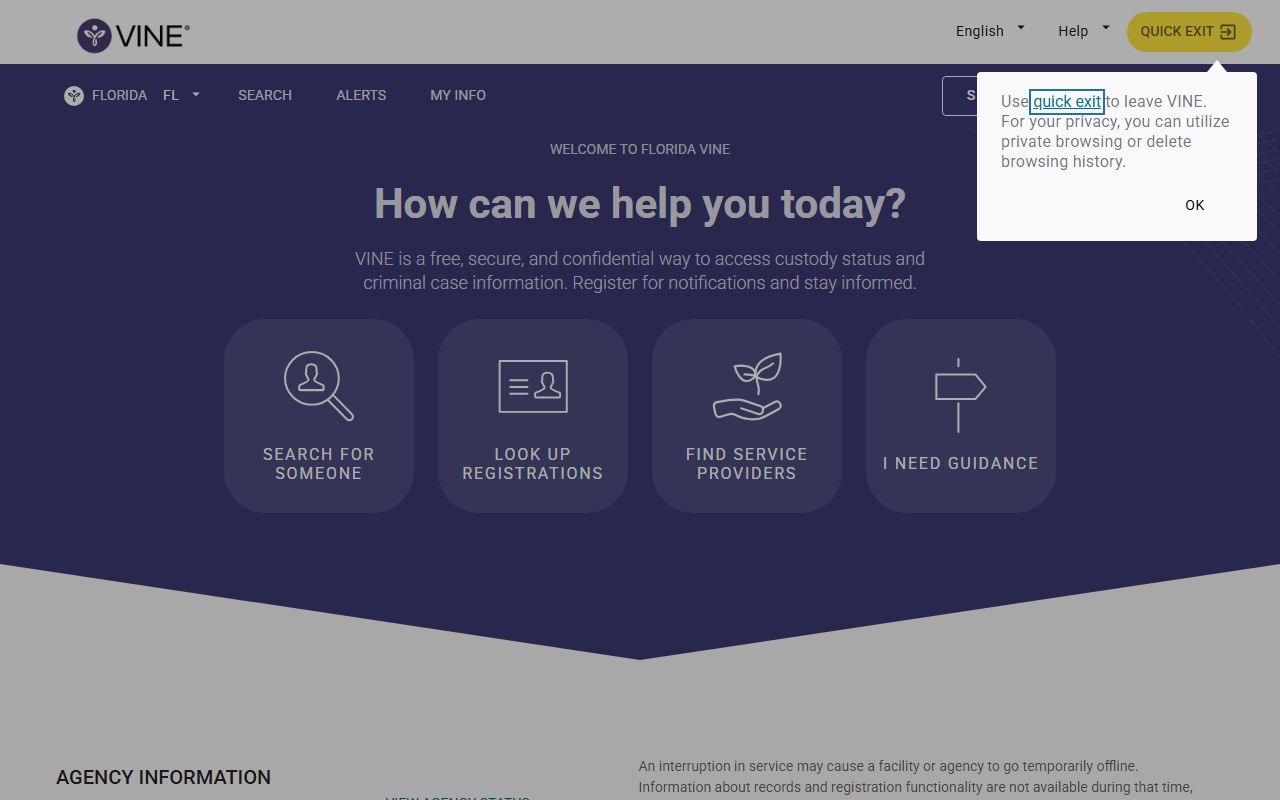
The Florida VINELink page is the public front door for victim notification across the state's county jails and state prisons.
Florida Department of Corrections Released Inmate Search
People sentenced to more than one year in Florida usually go to state prison, not the local jail. The state Department of Corrections runs FDC Offender Search for current and released state inmates. The same tool covers people on parole, probation, or other community supervision. A Duval County criminal case that ends in a prison sentence is tracked there after the transfer from the local jail.
FDC Offender Search holds DC number, name, race, sex, current status, sentence date, offense, and release date when the person has been let out.
| Field Label | Type | Required | Notes |
|---|---|---|---|
| DC Number | Text | Optional | Best exact match if known. |
| Last Name | Text | Optional | Primary key for name search. |
| First Name | Text | Optional | Use with last name to narrow. |
| Race | Dropdown | Optional | Filter where exposed. |
| Sex | Dropdown | Optional | Filter where exposed. |
| Release Date / Status | Filter | Optional | Use for released or supervised offenders. |
A typical state profile shows DC number, name, aliases, race, sex, birth date, current facility or supervision office, custody status, sentence date, the case offenses, release date, supervision type, and any detainers or warrants. Family members can use the same tool to track transfers between state facilities.
Federal Bureau of Prisons Inmate Locator
People sentenced in federal court for federal crimes are held by the Federal Bureau of Prisons. The agency runs the BOP Inmate Locator. The same tool covers people released from federal custody since 1982. A Duval County case that turns into a federal prosecution, or a federal prosecution that uses local jail space for pretrial holding, can leave a trail in this database.
| Field Label | Type | Required | Notes |
|---|---|---|---|
| Number | Text | Optional | BOP Register Number, DCDC, FBI, or INS depending on type selected. |
| First | Text | Optional | First name. |
| Middle | Text | Optional | Middle name when known. |
| Last | Text | Optional | Last name for primary search. |
| Race | Dropdown | Optional | Federal race filter. |
| Age | Number | Optional | Age filter to narrow common names. |
| Sex | Dropdown | Optional | Male or female filter. |
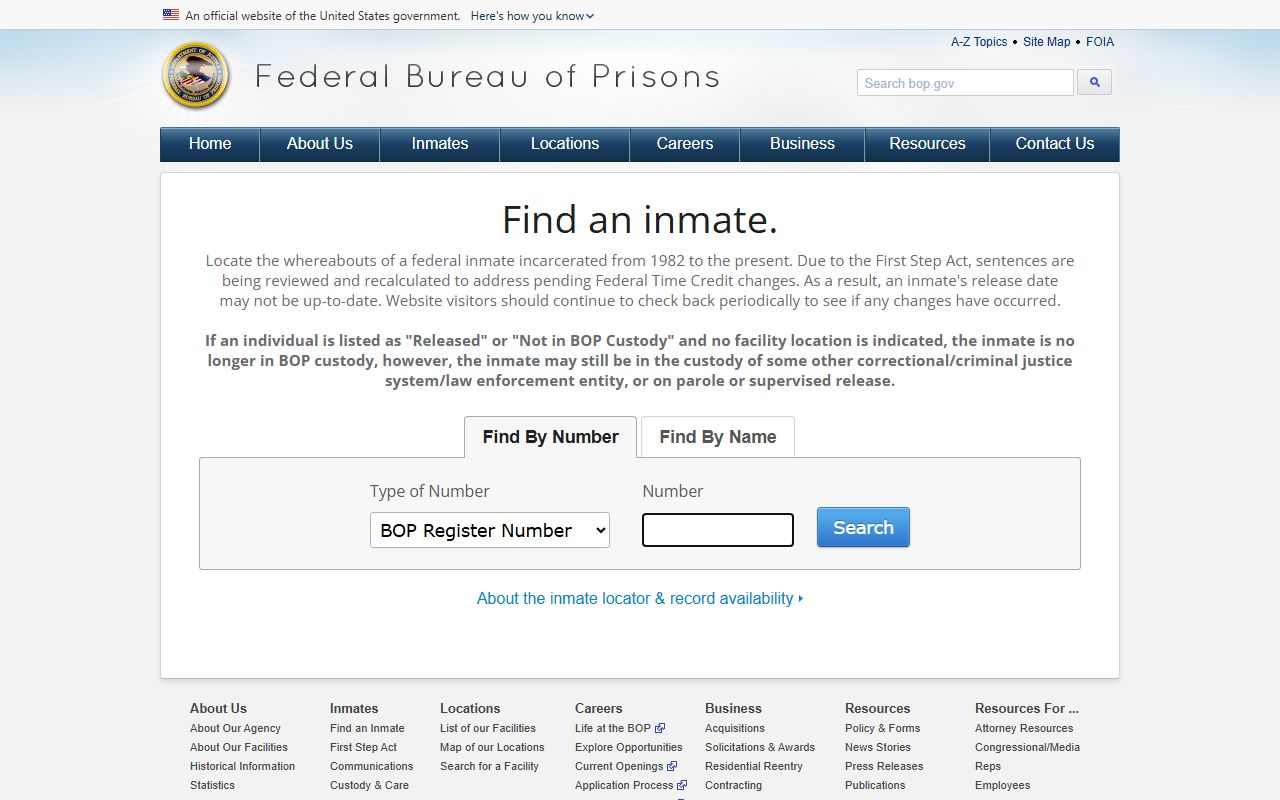
The federal locator shows name, register number, age, race, sex, release date or in-custody status, and current housing location when applicable.
Florida Sex Offender and Predator Registry
A separate registry covers people required to register as sexual offenders or predators in Florida. The Florida Department of Law Enforcement maintains the FDLE Sex Offender and Predator Registry. The site supports name search, address search, neighborhood maps, and a campus search mode. Registration tracks people after their release from prison or jail, so the data overlaps with the FDC and JSO release information.
| Field Label | Type | Required | Notes |
|---|---|---|---|
| Name | Text | Optional | Search by offender or predator name. |
| Address / City / County / ZIP | Text / Dropdown | Optional | Locate offenders near a chosen area. |
| University / Campus | Search mode | Optional | Campus-specific search. |
| Radius / Map Controls | Filter | Optional | Neighborhood or radius search. |
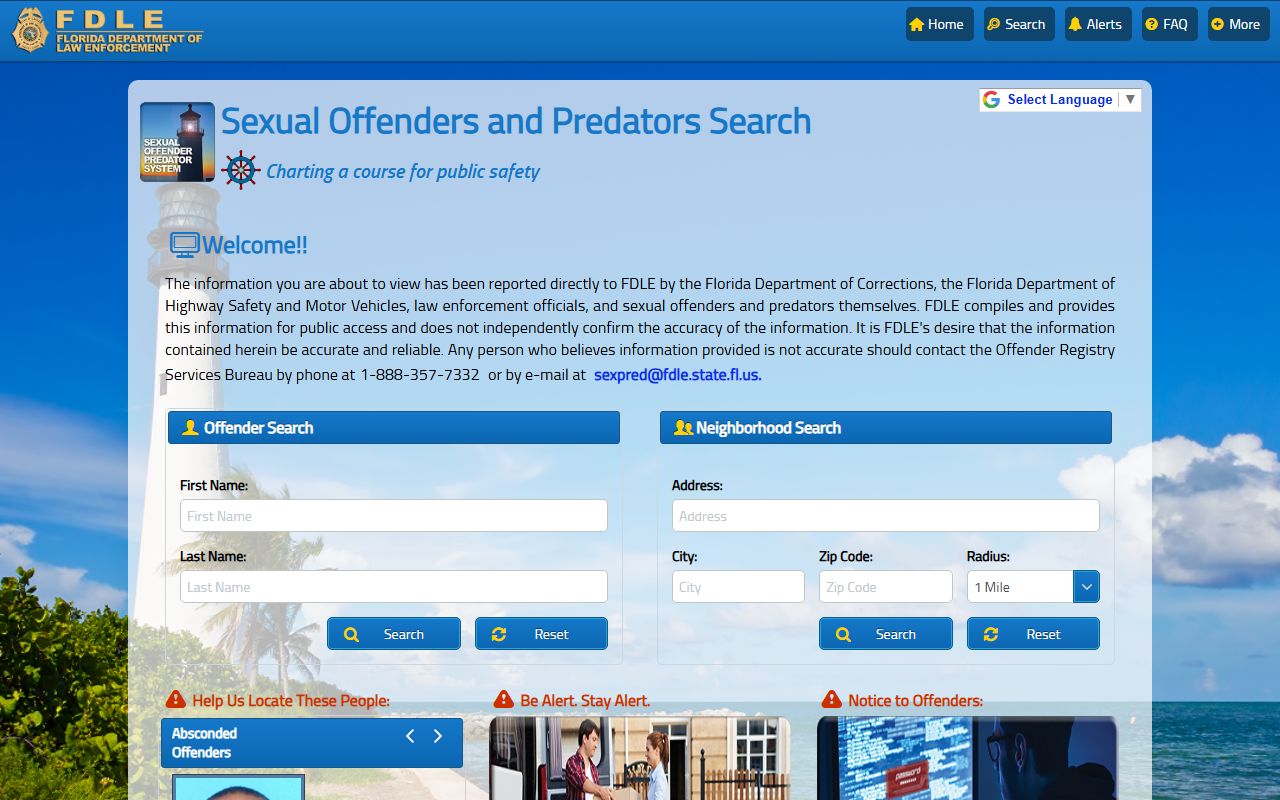
A registry profile lists name, photo, designation (offender or predator), aliases, physical description, residence address, transient status if applicable, vehicles, employer or school if listed, the qualifying offense, conviction jurisdiction and date, current registration status, and absconded status.
The FDLE registry bureau has a toll-free number for tips and questions, 1-888-FL-PREDATOR (1-888-357-7332). Reports of an absconded offender go to that line or to local law enforcement.
Verifying a Release in Person or by Phone
Some releases are easier to confirm by voice. The Sheriff's Office Jail/Inmate Information line at (904) 630-5760 answers calls about Duval County jail status. The desk staff can confirm whether a person is in custody, was released, or has been moved to another facility. Calling makes sense when the online tool is unclear, when the release just happened, or when the person was held under an alias.
Property pickup is part of release for some people. The Sheriff's Office allows pickup of money and keys in specified facility contexts. The Community Transition Center page notes that money and property cannot be accepted during visitation hours, so timing matters for any in-person trip.
Once a state prison sentence has ended, the FDC supervision office is the next contact point for anyone on probation, parole, or conditional release. The supervision officer holds the current address, employment, and conditions on file. The inmate records page covers in-custody contact details for the JSO facilities.
Family members and victims often call from different angles. A family member may want to confirm a relative is out and where to pick them up. A victim may want to know the same fact for safety planning. The Sheriff's Office line treats both calls the same way: confirm the custody status, the last facility, and the time of release. Anything past that, such as new address or future court dates, is handled by the case file with the Clerk and the supervising agency.
Reentry Resources After Release in Duval County
Reentry support for people released from Duval County custody comes from a mix of city, state, and nonprofit sources. The Sheriff's Office runs the Community Transition Center, which provides Work Furlough and the Matrix House substance abuse treatment program for county sentenced inmates. Both programs are inside-custody supports that bridge to release.
State support runs through the Florida Department of Corrections reentry program. The FDC website lists reentry pages for state prison releases, including the same Offender Search tool used to track current status. Public verification of a specific Duval County reentry provider list was not located in the official Sheriff's Office and Clerk pages reviewed for this site. People seeking workforce help, housing help, or substance use support should contact the local CareerSource workforce office, Jacksonville-area legal aid, and area nonprofit reentry programs directly to confirm current services.
Some help reaches across all releases:
- Identification: a state ID is often the first paperwork need after release.
- Housing: transitional housing slots fill fast; ask the FDC reentry team early.
- Workforce: CareerSource Northeast Florida runs job-search and training programs.
- Legal aid: civil legal aid handles family, housing, and record-sealing matters.
- Health: Medicaid enrollment after release can restart on the day of release.
Note: Resource lists change often; confirm each provider's intake hours and eligibility before sending a referral.
Civil Rights and Voting After Release
Florida law restores some civil rights after a felony sentence ends. Voting rights restoration follows Amendment 4 and the implementing law, which ties restoration to completion of the sentence and related financial obligations. The Florida Division of Elections and the Office of Executive Clemency hold the official rules. Specific eligibility rules can change with new case law, so people leaving custody should check the current Division of Elections guidance before registering to vote.
Other rights are restored on different timelines. Firearm rights generally require a separate clemency process. The right to serve on a jury and to hold some public offices follows a similar path. Verifying the current path with the Office of Executive Clemency is the safe move before any application.
For sealing or expunction of a Duval County criminal record, the path goes through the Florida Department of Law Enforcement and then the Clerk of the Circuit and County Courts. The warrant records page covers active warrant cleanup, and the inmate population page covers the broader population data tied to Duval County corrections.